














A smarter use of screen time starts here

Too much scrolling? Replace screen time with chess.

  • Free demo class
  • Level recommendation
  • No obligation
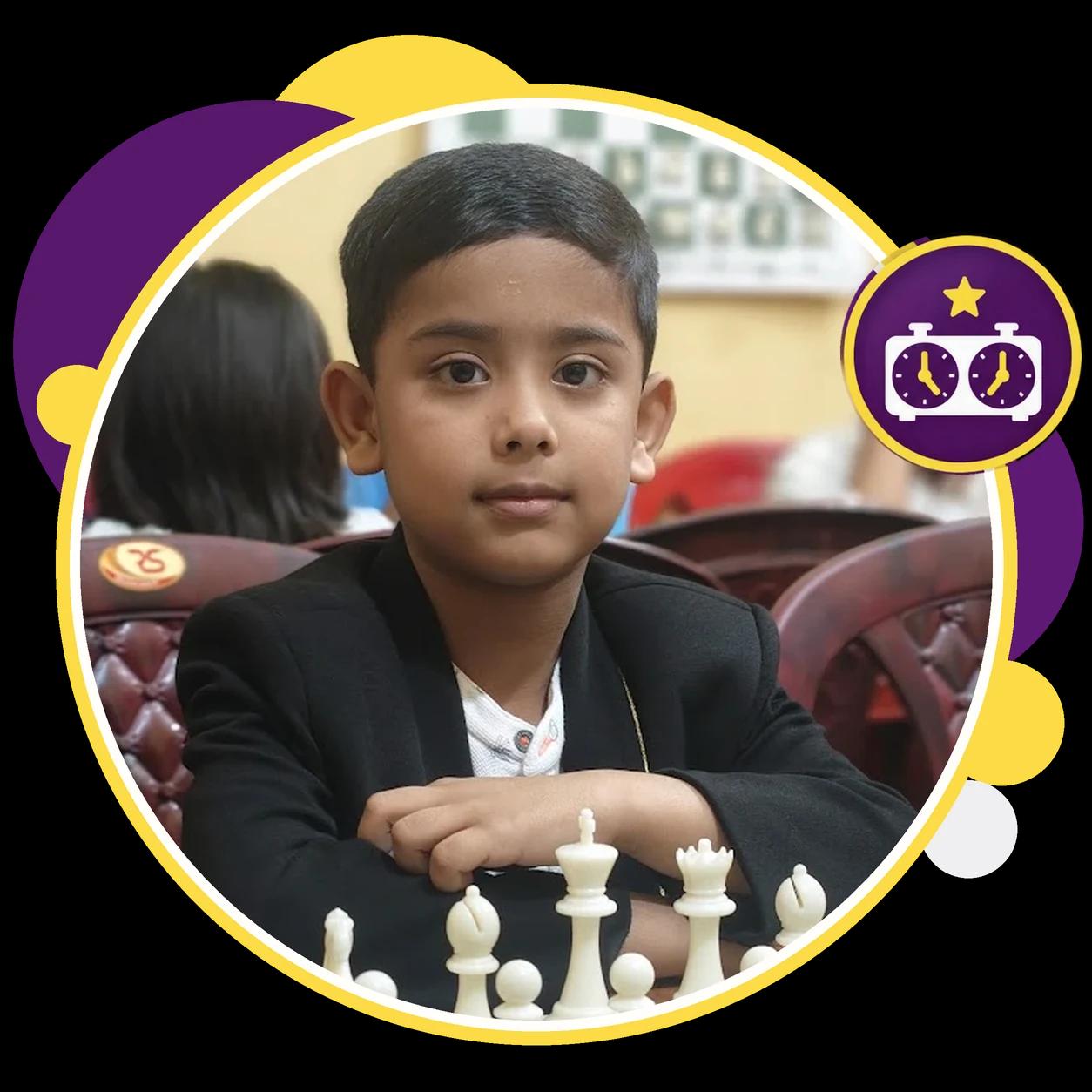
Envision Chess Academy student seated at a chessboard before a tournament game
Make their screen time count.
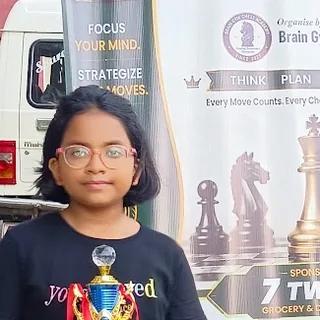
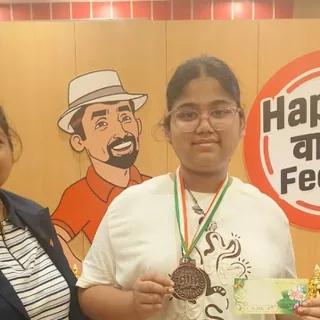
Real students. Real achievements.

This could be your child's next move.

Every achievement begins with a first move. Meet Envision students who started their own chess journey and went on to earn recognition on bigger stages. Your child's journey could start here.

What excessive screen time can cost
The bigger concern may be what excessive screen time means for a developing brain.

Excessive screen time can disrupt sleep and encourage sedentary habits associated with weight gain. But one of the most serious concerns raised in child-health and neuroscience research is its potential relationship with altered brain development, including structural changes in the prefrontal cortex, which plays a vital role in attention, impulse control and decision-making.

Research context: longitudinal and neuroimaging research on screen use and brain development. Read the study ↗
Fees

Start the journey. Pick how you learn.

Beginner and Intermediate fees below. For Semi-Pro, Pro and Masters, ask us during your free demo.

Stage 01 · Foundation

Beginner

Build strong foundations with guided lessons, practical exercises and a structured learning path.

Group Classes

Learn together, grow together

60 minutes per class
DurationTotal amountOffer priceClasses
1 month₹3,600₹3,0008
3 months₹9,000₹8,00024
6 months₹16,000₹14,00048
  • 2 classes per week
  • Live online classes
  • Structured curriculum and small batch size
  • Practice tournaments (4 per week)
  • Worksheets and study material
  • Class recordings, subject to availability
  • Certificate of completion

Individual Classes

Personalized attention, faster progress

45 minutes per class
DurationTotal amountOffer priceClasses
1 month₹4,500₹4,0004
3 months₹12,000₹11,00012
6 months₹24,000₹20,50024
  • 1 class per week
  • One-to-one live online classes
  • Fully customized learning plan
  • Flexible scheduling, subject to availability
  • Practice tournaments (4 per week)
  • Personalized worksheets and study material
  • Class recordings, subject to availability
  • Certificate and direct mentor support

Stage 02 · Tactics

Intermediate

Develop tactical awareness, calculation and confidence in handling complex positions.

Group Classes

Learn together, grow together

60 minutes per class
DurationTotal amountOffer priceClasses
1 month₹3,600₹3,0008
3 months₹9,000₹8,00024
6 months₹16,000₹14,00048
  • 2 classes per week
  • Live online classes
  • Structured curriculum and small batch size
  • Practice tournaments (4 per week)
  • Worksheets and study material
  • Class recordings, subject to availability
  • Certificate of completion

Individual Classes

Personalized attention, faster progress

45 minutes per class
DurationTotal amountOffer priceClasses
1 month₹4,500₹4,0004
3 months₹12,000₹11,00012
6 months₹24,000₹20,50024
  • 1 class per week
  • One-to-one live online classes
  • Fully customized learning plan
  • Flexible scheduling, subject to availability
  • Practice tournaments (4 per week)
  • Personalized worksheets and study material
  • Class recordings, subject to availability
  • Certificate and direct mentor support

Make their next screen session count

Replace passive scrolling with a challenge that makes them think.

Book a free demo. Meet an Envision coach, understand your child's current level and get a clear recommendation. No obligation to enrol.

Book a free demo

The people behind your progress

Good moves start with great mentors.

Learn with FIDE and National Instructors, backed by a team of rated players. Real experience at the board. Personal guidance at every step.

Every coach.
Officially FIDE-rated.

Ratings as of November 2026. Profiles link directly to the official FIDE ratings website.

Skills they use every school day

Help them become more thoughtful learners, one move at a time.

From understanding a maths problem to preparing for a test, children are constantly asked to pay attention, think clearly and work through challenges. Chess gives them a structured way to practise these habits.

Stay focused in class

Practise giving one problem their attention, noticing details and staying with a task before moving on.

Work through difficult questions

Break a challenge into smaller steps, examine the information and consider different ways to solve it.

Think before answering

Pause, weigh the options and choose a response instead of rushing into the first answer.

Plan homework and tasks

Think about what needs to happen first, what comes next and how each step affects the result.

Learn from mistakes

Review an incorrect answer, understand where the thinking went off track and try a better approach.

Build independent thinking

Practise explaining why a choice makes sense and taking responsibility for the next move.

The Envision approach

Not just online chess lessons. A complete learning system.

01 / LEARN

Live, coach-led classes

Two structured live classes every week, matched to the child's current ability.

02 / PRACTISE

Homework and feedback

Assignments, practice tools and coach-reviewed work keep learning active between sessions.

03 / COMPETE

Weekly tournaments

Regular games, pairings, leaderboards and results help students apply what they learn.

04 / TRACK

Parent-visible progress

Attendance, assignment scores, tournament results and progress reports in one portal.

05 / PROGRESS

A clear learning pathway

Five stages and fifteen levels take students from beginner foundations towards advanced play.

06 / SUPPORT

Ask the coach

Students can share positions and questions with their coach between scheduled sessions.

Make the time intentional

See what a small weekly commitment can look like.

Choose a daily time block and see how it adds up over a week. This is a family planning tool, not a claim that all screen time should be replaced.

30 min
10 min60 min120 min
3.5 hours across a weekA small, repeatable block of time can help establish a regular learning habit.
The Envision pathway

Every champion starts as a pawn.

Five stages walk your child up the board, from the very first move to a FIDE rating. Reach the last rank and the pawn becomes a queen.

  1. Stage 01 · e2For starters

    Beginner

    Learn the game the right way

    Plays a complete game by every rule, and checkmates with queen and rooks.

    Level 116 sessions
    • Introduction to the course
    • Introduction to the pieces & their values
    • Movement of Rook
    • Movement of Queen (including captures)
    • Movement of Pawn
    • Movement of Knight (including captures)
    • +8 more
    Level 216 sessions
    • Stalemate
    • Castling & Exceptions
    • Promotion & Underpromotion
    • En Passant
    • Legal and Illegal Moves
    • How Does a Game End in a Draw
    • +6 more
    Level 316 sessions
    • Mate in 1
    • Checkmate with King and Queen
    • Checkmate with Double Rook
    • Checkmate with Single Rook and King
    • Proper Defensive Choices
    • Opening Traps (Simple)
    • +2 more
    Full Beginner syllabus →
  2. Stage 02 · e4For starters

    Intermediate

    Sharpen tactics and calculation

    Spots forks, pins and skewers, and finds mates in two and three.

    Level 116 sessions
    • Double Attack & Knight Fork
    • Double Attack
    • Pin
    • Skewer
    • Back Rank
    • Discovered Attack & Check
    • +1 more
    Level 216 sessions
    • Trapping Pieces
    • Forced Moves (Check
    • Defending by Check or Pin
    • Capturing the Defender
    • Deflection
    • Checkmate in 1 with Pin
    • +6 more
    Level 316 sessions
    • Intermediate Move
    • Decoy
    • Windmill
    • Overloading
    • Smothered Mate & Suffocation Mate
    • Pattern Recognition
    • +2 more
    Full Intermediate syllabus →
  3. Stage 03 · e5Tournament debut

    Semi-Pro

    Start playing tournaments

    Tournament-ready: sound endgame technique and an opening repertoire.

    Level 116 sessions
    • Opposition (Basic & Distant Opposition)
    • Key Squares
    • The Rule of the Square
    • Triangulation
    • Mined Squares
    • King and Pawn Endgames You Must Know
    • +9 more
    Level 216 sessions
    • Italian Game as White
    • Ruy Lopez as White
    • Queen's Gambit as White
    • London System as White
    • 1.e4 e5 Classical Open Games as Black
    • Sicilian Defence as Black
    • +6 more
    Level 316 sessions
    • Rook against Pawn
    • Knight against Pawn
    • Bishop against Pawn
    • Queen against Pawn on the 7th Rank
    • Basic Rook Endgames: Lucena
    • Basic Rook Endgames: Philidor
    • +5 more
    Full Semi-Pro syllabus →
  4. Stage 04 · e6FIDE rating push

    Pro

    Push for a FIDE rating

    Calculates deep combinations and sacrifices that win rated games.

    Level 116 sessions
    • X-Ray Attack
    • Clearance
    • Blockade
    • Destroying the Castled King
    • Combination involving Promotion
    • Combination involving Files
    • +4 more
    Level 216 sessions
    • Greek Gift Sacrifice
    • Perpetual Check
    • Stalemate Combinations
    • Opening and Closing Lines
    • Positional Strengths of Each Piece
    • Bishop and Knight Checkmate
    • +5 more
    Level 316 sessions
    • Discovered Attack
    • Double Check
    • Back Rank
    • Overloading
    • Deflection
    • Decoy
    • +8 more
    Full Pro syllabus →
  5. Stage 05 · e7FIDE rated & climbing

    Masters

    Achieve a FIDE rating and fight to improve it

    Plays positional, strategic chess built to keep the rating climbing.

    Level 116 sessions
    • Mating Combinations
    • The 7th Rank
    • Line Blocking
    • Outpost
    • Underpromotion
    • Exploiting Weaknesses
    • +6 more
    Level 216 sessions
    • Isolated Pawns
    • Doubled Pawns
    • Backward Pawns
    • Hanging Pawns
    • Passed Pawns
    • Pawn Islands
    • +6 more
    Level 316 sessions
    • Pawn Chain
    • Attacking with Queen and Bishop
    • Attacking with Queen and Rook
    • Attacking with Queen and Pawn
    • Attacking with Rook and Bishop
    • Attacking with Rook and Knight
    • +8 more
    Full Masters syllabus →
  6. e8 = ♛ · Promotion

    FIDE glory

    A rated player, still climbing. Every stage before this one is a step up the board.

    Make the first move: book a free demo
5 stages · 15 levels · 240 taught sessions · 2 live classes each week
Simple to get started

Five steps from curiosity to a clear learning plan.

  1. 01

    Book a free demo

    Book a free online demo and meet an Envision coach.

  2. 02

    Meet the coach

    The coach explores a few positions and understands what your child knows.

  3. 03

    Get the right level

    Receive a recommendation for the stage that fits your child.

  4. 04

    Learn and practise

    Attend live classes, complete assignments and take part in tournaments.

  5. 05

    Follow their progress

    Use the parent portal to see attendance, feedback, results and milestones.

Questions parents ask

A few things worth knowing before you begin.

Does my child need to know chess already?
No. Complete beginners are welcome. The coach assesses the child's current understanding and recommends the right starting session.
Are classes online or offline?
Both. Live online classes are available across India and internationally.
How often do students attend classes?
The standard learning rhythm is two live classes per week. Each level contains 16 sessions and takes approximately two months.
Can parents track their child's progress?
Yes. The academy portal gives parents access to attendance, assignment scores, tournament results, progress reports and other learning updates.
Is the assessment free?
Yes. The demo is a no-obligation assessment with a coach. Your child gets to experience the class and you receive a level recommendation.
Will chess automatically improve school marks or memory?
No academy should promise that. Chess gives children structured practice in planning, calculation, evaluating options and reviewing mistakes. Whether those skills transfer to school performance varies, and research does not justify guaranteed academic outcomes.